Phone-free primary schools with children's welfare as a guiding principle
This fall, Reykjavík's primary schools will implement phone-free time, partnering with the university community to track its impact on the professional environment, academic outcomes, and children's welfare. The City Council gave its approval to the measure today.
The City Council approved a directive authorizing the Department of Education & Youth to implement phone-free time in Reykjavík's primary schools in the fall of 2026. Under phone-free time, students may not use mobile phones or similar smart devices during school hours—including recess and lunch breaks—unless staff consent or a defined exception applies. Although each school will establish its own rules for implementation, all schools must provide suitable facilities and clear protocols to store phones securely throughout the school day. In collaboration with the university community, the city will systematically evaluate the effects of phone-free time over a two-year period. This evaluation will examine academic performance, student well-being, and the working environment for teachers and other staff, among other factors.
While smartphones play a major role in the daily lives of children and young people, key questions have arisen regarding how phone use affects schooling, focus, student interaction, and well-being.
Mayor Hildur Björnsdóttir hailed phone-free time as a key milestone. "School should be a sanctuary where children can focus on learning, develop their social skills, and actively participate in the school community without the constant distraction of smart devices," Hildur said. "Phone-free time in primary schools is fundamentally about providing children with a better space to learn, play, and connect with one another. Because we want our decisions grounded in evidence, we will closely monitor how this change affects student well-being, academic outcomes, and the school environment. Rather than rejecting technology, our goal is to create a healthy environment that supports children's welfare and effective schooling."
Schools are not abandoning technology
On June 10, the Ministry of Education and Children published a draft regulation on phone-free time in primary schools on the government's Consultation Portal, and the City intends to align its rollout with the ministry's plans. UNESCO, the United Nations Educational, Scientific and Cultural Organization, addressed technology use in schools in its 2023 global education report. The report emphasizes that educators should use technology in teaching only when it clearly supports learning objectives and academic outcomes. Although technology can be a valuable tool, excessive or inappropriate use can have negative effects. UNESCO also noted that internet-connected devices can amplify cyberbullying in school settings, and that social media use can affect the well-being and self-image of children and young people.
Positive experiences with limiting phone use
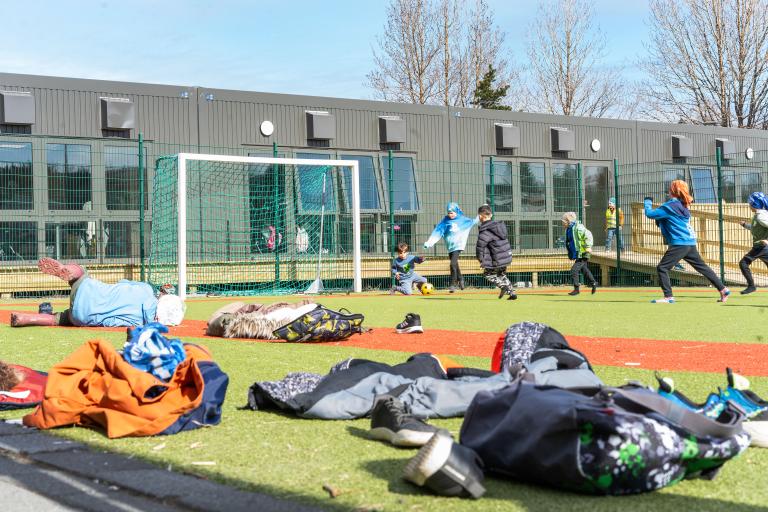
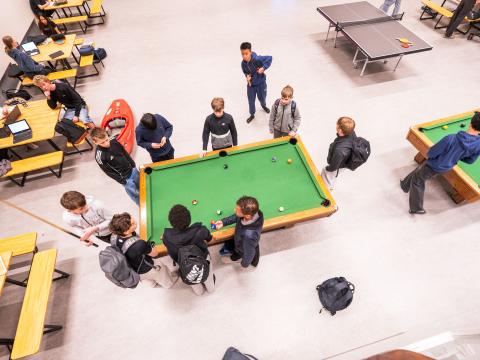
Phone-free time in schools is fundamentally about children's welfare, creating genuine opportunities for interaction and connection as social skills develop through practice and everyday communication. Experiences in Icelandic schools also indicate that limiting phone use can improve school culture.
The proposal from the City's majority parties states that phone rules must be grounded in children's welfare, have a clearly defined purpose, and be developed in consultation with students, parents, and staff. The policy must provide reasonable exceptions—such as those for disabled students, health, or learning needs—and account for the recreational value of phones by offering varied leisure options, especially for students at the adolescent level. Improving facilities for socializing, games, outdoor play, and sports could help increase participation, strengthen student connections, and build social skills.